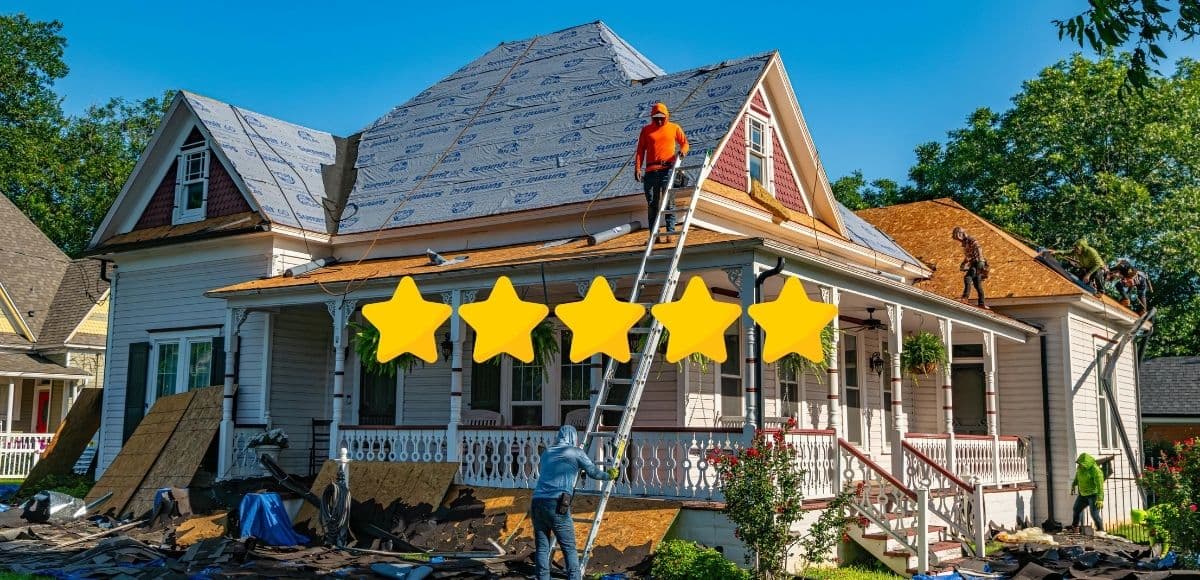
Picture two plumbers. Same city, similar experience, comparable pricing. One is booked out three weeks. The other is scrambling for jobs.
The difference isn't their wrench skills. It's their Google rating.
Contractor A: 4.8 stars with 147 reviews. Contractor B: 4.1 stars with 23 reviews.
That 0.7-star gap is costing Contractor B thousands every month.
Here's the brutal truth: 91% of homeowners rely on online reviews before hiring a contractor, and 87% won't even consider you if you're below 4 stars. If you're not actively collecting reviews, you're invisible to most potential customers.
The problem isn't that your work isn't good enough. The problem is that your happy customers aren't telling anyone about it online.
This guide fixes that.
Key Takeaways
- 91% of homeowners check reviews before hiring contractors - if you're not asking for reviews, you're losing jobs to competitors who are
- 87% won't hire contractors rated below 4 stars - your star rating is a make-or-break filter before anyone even calls you
- 82% consider Google reviews essential for choosing contractors - Google dominates the review landscape for home services
- One-star rating increase = 5-10% revenue boost - better reviews directly translate to more bookings and higher income
- Phone calls convert 10-15x more revenue than web leads - and reviews are the #1 driver of those high-value phone calls
- 56% check Google reviews first - making it twice as important as contractor websites (51%) and nearly 50% more important than Facebook
- 43% of contractors don't respond to reviews - massive opportunity to stand out by simply engaging with feedback
- The 24-48 hour window matters - asking within two days of job completion gets significantly higher response rates
- Customers forget - only 10% of satisfied customers leave reviews without being asked, so you need a system
Why Home Services Are Different (And Why Reviews Matter More)
If you're a plumber, electrician, HVAC tech, landscaper, or any home services contractor, you face challenges restaurants and retail stores don't.
You're asking people to let a stranger into their home. That's a huge trust barrier.
The Trust Barrier: What Homeowners Worry About
Home services face a bigger trust barrier than almost any other industry. You're asking people to let strangers into their homes to do expensive work.
Will they show up on time?
No-shows and late arrivals are the #1 complaint about contractors. Every review mentioning punctuality builds trust.
Will they finish the job?
Homeowners have horror stories of contractors who disappear mid-project. Completion reliability is huge.
Can I trust them in my home?
You're asking for access to their most valuable asset. Reviews mentioning professionalism ease this fear.
Will they quote one price and charge another?
Pricing transparency is mentioned in 68% of negative contractor reviews. Honest pricing wins jobs.
Is their work actually good?
Unlike a restaurant where you can see the food, home services work is often hidden (plumbing, electrical). Reviews prove quality.
Unlike restaurants where customers can see the food or retail where they can touch products, your work is often invisible or technical. A homeowner can't tell if you wired something correctly or if your HVAC repair will last. They have to trust you.
Reviews are that trust, made visible.
The data backs this up. 84% of homeowners use Google before choosing a contractor, and consumers read an average of 10 reviews before feeling able to trust a local business.
For home services, reviews aren't just nice to have. They're the difference between a full calendar and an empty one.
The Review Gap: Why Contractors Struggle More Than Other Businesses
Getting reviews as a contractor is harder than getting reviews as a restaurant. Here's why:
The customer isn't always present
A roofing contractor finishes a job while the homeowner is at work. By the time they get home, the crew is gone. There's no natural moment to ask for a review.
Jobs take days or weeks
A multi-day bathroom remodel or weeks-long landscaping project means the "completion moment" is fuzzy. Customers don't think "I should leave a review" when the job drags over two weeks.
Customers forget
Life gets in the way. They meant to leave a review. They really did. But three days later, the urgency is gone. Only 10% of satisfied customers leave reviews without being asked.
Emergencies don't lend themselves to reviews
When someone calls you at 11 PM because their basement is flooding, they're stressed. Once you fix it, they're relieved. Leaving a review is the last thing on their mind.
You work across multiple cities
Unlike a restaurant that dominates one neighborhood, contractors often cover 10-20 cities. Ranking in Google's local 3-pack in every town feels impossible.
The good news? Most contractors aren't solving this. That means if you do, you win.
The Numbers Don't Lie: How Reviews Impact Your Bottom Line
Let's talk money. Because reviews don't just make you "look good." They make you money.
Here's how that breaks down:
Star Rating Thresholds:
- Below 3.5 stars: Most homeowners won't even click. You're invisible.
- 3.5 to 4.0 stars: You're in the conversation, but losing to higher-rated competitors.
- 4.0 to 4.5 stars: You're competitive. People will call.
- 4.5+ stars: You're the obvious choice. Your phone rings first.
The Magic Number: 4.7 Stars
Interestingly, a perfect 5.0 rating can actually hurt you. Studies show 4.7-4.8 stars convert better than 5.0 because a few critical reviews make the positive ones look more authentic. Homeowners are smart. They know nobody's perfect.
Volume Matters Too
57% of consumers will only use a business if it has 4 or more stars, but star rating alone isn't enough. A 4.9 rating with 8 reviews looks suspicious. A 4.7 rating with 120 reviews looks legit.
Phone Calls = Revenue
Here's the kicker: Phone calls convert to 10-15x more revenue than web leads. When someone calls, they're ready to book. When they fill out a form, they're shopping around.
And what drives phone calls? Reviews. 40% of home services consumers who call from search make a purchase. Those calls are gold.
Where Homeowners Look for Contractor Reviews
Not all review platforms are created equal. Here's where homeowners actually look:
Where Homeowners Look for Reviews
Dominates local search and Google Maps results
Direct testimonials and case studies
Still relevant, especially in certain regions
Growing importance for local businesses
Home services-specific platform
Critical for remodelers and designers
Pay-per-lead platform
Google is the undisputed king. 56% of homeowners seek out reviews on Google, making it twice as important as Yelp and more important than your own website.
Why Google dominates:
- It's where people search for "plumber near me"
- Reviews show up directly in search results
- Google Business Profile appears in Google Maps
- It's free and easy for customers to use
That said, don't ignore the others. 82% of buyers find review sites valuable in their search. Having a presence on Angi, Yelp, and Facebook broadens your visibility.
For remodelers, designers, and high-end trades, Houzz is critical. For quick jobs and lead generation, Thumbtack and HomeAdvisor can supplement (though they cost per lead).
Focus your energy on Google, but maintain a presence across platforms homeowners trust.
Trade-Specific Insights: What Customers Look For
Different trades face different review challenges. Here's what matters most for each:
Plumbers
What plumbers should emphasize:
- Fast response times (mention "within 2 hours" or "same-day service")
- Clean work areas (customers notice if you left a mess)
- Honest pricing (no surprise charges)
- Warranty on work
Electricians
What electricians should emphasize:
- Safety (customers fear electrical fires)
- Code compliance (mention permits and inspections)
- Diagnostic skills (found the problem quickly)
- Cleanup (no leftover wire scraps or drywall dust)
HVAC Contractors
What HVAC techs should emphasize:
- Diagnostic honesty (didn't upsell unnecessary repairs)
- Comfort results (house cooled down fast)
- Energy savings (explained efficiency improvements)
- Maintenance tips (taught them filter replacement)
Landscapers & Lawn Care
What landscapers should emphasize:
- Visual transformation (before/after photos are gold)
- Property respect (didn't damage existing plants)
- Cleanup (hauled away debris)
- Seasonal knowledge (chose plants that thrive locally)
General Contractors
What general contractors should emphasize:
- On-schedule completion (finished when you said you would)
- Budget adherence (no surprise costs)
- Communication (kept them updated throughout)
- Quality craftsmanship (work looks great, functions perfectly)
When to Ask for Reviews: The Contractor's Timing Guide
Timing is everything. Ask too soon, and the customer hasn't evaluated the work. Ask too late, and they've forgotten about you.
The Perfect Timing Sequence for Contractors
Ask in person at job completion
Hand them a card with a QR code or verbally mention it when collecting payment. Emotion is highest, and you can address concerns immediately if they hesitate.
Send an SMS follow-up
Text them with a direct review link. They have had time to see the finished work but the experience is still fresh. This is the sweet spot for contractors.
Send an email reminder
For those who didn't respond to the SMS, send a more detailed email. Some customers prefer email for thoughtful responses.
Final gentle reminder
Last touchpoint for non-responders. Keep it short and friendly. After this, move on.
Why the 24-48 hour window matters:
For home services, this window is critical because:
- The work is finished and visible
- The customer can evaluate results (AC is cold, leak is fixed, yard looks great)
- The relief/satisfaction emotion is still strong
- They haven't moved on mentally to the next thing
The exception: Multi-day or multi-week projects
If you're a general contractor doing a two-week kitchen remodel, don't wait until the end. Send a mid-project check-in asking how things are going. This serves two purposes:
- Catch problems early, while you can still fix them
- Build rapport so the final review request feels natural
Emergency jobs are tricky
When someone calls you at 2 AM because their water heater exploded, asking for a review on-site feels tone-deaf. But the next day? Perfect. They're relieved, grateful, and impressed you showed up fast. That's when you ask.
All-in-one growth platform
Turn every visit into more revenue with Spokk
One platform handles your entire post-visit customer lifecycle. More reviews, more repeat visits, more referrals. No juggling separate tools.
Google Reviews
AI-drafted reviews customers actually post
SMS Automation
Feedback, review, and referral sequences on autopilot
Loyalty Program
QR check-in rewards that bring customers back
Referral Program
Every customer gets a unique link to send friends
Feedback Collection
Private channel for every customer after every visit
Testimonials
Video and text testimonials collected automatically
How to Ask Without Being Pushy: Templates That Work
Let's get specific. Here are word-for-word templates for contractors.
In-Person Ask (At Job Completion)
Script:
"We're all set here. Everything's working perfectly. Before I head out, I wanted to mention—if you're happy with the work, it would really help us if you could leave a quick review on Google. We're a small business, and reviews make a big difference. Here's a card with a QR code—just scan it and it takes you right there. Takes about 30 seconds."
Why it works: Simple, direct, explains the "why," makes it easy with a QR code.
SMS Review Request (24 Hours Post-Job)
"Hi [Name], it's [Your Name] from [Company]. Thanks for choosing us for your [service]. Hope everything's working great! If you're happy with the job, we'd love if you could leave us a quick review: [link]. It really helps. – [Company Name]"
Character count: Under 160 for a single SMS.
Why it works: Personal, brief, includes a direct link, friendly tone.
Email Review Request (24-48 Hours Post-Job)
Subject: Quick question, [Name]?
Body:
Hi [Name],
Thanks for trusting [Company Name] with your [service] work. We hope everything turned out great.
If you're satisfied with the job, would you mind sharing your experience on Google? It really helps other homeowners find us when they need help.
[Button: Leave a Review in 30 Seconds]
We appreciate your time, and if there's anything we can improve, please let us know directly.
Thanks, [Your Name] [Company Name]
Why it works: Focuses on customer satisfaction, clear call-to-action, offers a way to give private feedback if something's wrong.
QR Code on Invoice/Business Card
Print a QR code that links directly to your Google review page. Place it on:
- Invoices
- Business cards
- Door hangers (leave behind after service)
- Vehicle magnets
Why it works: No typing URLs. Point phone, scan, review. Frictionless.
The Before/After Photo Strategy: Visual Proof Sells
Contractors have a secret weapon that restaurants and retail stores don't: transformational visuals.
A before/after photo of a transformed bathroom, a pristine lawn, or a new roof is incredibly powerful. It's proof of your skill in a way words can't match.
How to Get Customers to Include Photos in Reviews
- Take your own before/after photos during the job and text them to the customer with the review request
- Ask permission to take photos at the start of the job—most customers are happy to help
- Mention in your review request: "Feel free to attach the before/after photos I sent you"
- Offer a small incentive for photo reviews (e.g., "$25 off your next service if you include photos"—just don't tie it to positive reviews only)
- Feature the best photo reviews on your website and social media to encourage others
Why photo reviews work:
Visual reviews increase conversion rates significantly. When a potential customer sees a photo of a job like theirs with glowing feedback, they imagine you doing the same for them.
Pro tip for landscapers and remodelers:
Create a simple Google Photos album for each job. Send the link to the customer with your review request. They can attach the photos directly from the album to their Google review.
Common Mistakes Contractors Make (And How to Fix Them)
Common Mistakes That Kill Your Review Count
Mistake #1: Not Asking at All
You finish the job, collect payment, and hope they remember to leave a review. They won't. Only 10% of satisfied customers leave reviews without being asked.
The fix: Ask every customer, every time. Make it part of your process. Train your team to ask on-site, then follow up via text.
Mistake #2: Asking Too Late
You send a review request two weeks after the job. They've moved on. The details are fuzzy. The urgency is gone.
The fix: Ask within 24-48 hours. Set a calendar reminder or use automation to send requests immediately after job completion.
Mistake #3: Making It Complicated
You say "search for us on Google and leave a review." They have to find you, navigate to your profile, figure out reviews. Too many steps.
The fix: Send a direct link to your Google review page or use a QR code. One tap should get them there.
Mistake #4: Not Responding to Reviews
43% of contractors don't respond to reviews. Silence makes you look indifferent or guilty.
The fix: Respond to every review within 24-48 hours. Positive reviews: say thanks and mention specifics. Negative reviews: apologize, offer to make it right, move the conversation offline.
Mistake #5: Only Asking Happy Customers (Review Gating)
You send a survey asking "How did we do?" and only direct 5-star responses to Google. This violates Google's policies and can get all your reviews removed.
The fix: Ask everyone. If someone had a bad experience, let them leave it on Google where you can respond professionally, or handle it privately before they do.
Mistake #6: Ignoring Negative Reviews
Someone leaves a 1-star review and you panic, ignore it, or worse—argue publicly.
The fix: Respond professionally. Acknowledge the issue, apologize, and offer to resolve it. Future customers see how you handle problems.
The Multi-Location Challenge: Contractors Who Cover Multiple Cities
Unlike a restaurant tied to one neighborhood, contractors often cover 10, 20, or 50+ cities. This creates a local SEO nightmare.
The problem:
Google's local 3-pack shows businesses closest to the searcher. If you're based in City A but someone searches "plumber near me" in City B (20 miles away), Google might not show you—even if you serve that area.
The solution:
-
Optimize your Google Business Profile for your main location, but list all service areas.
-
Create location-specific pages on your website. Example: yourplumbingcompany.com/plumbing-services-in-city-b
-
Ask customers to mention their city in reviews. "Great work in Springfield!" helps Google associate you with that location.
-
Collect reviews consistently across all service areas. If you have 100 reviews but they're all from City A, you won't rank in City B.
-
Use Google Local Service Ads (LSAs) to cover multiple cities. LSAs let you target specific zip codes and show up as "Google Guaranteed."
Pro tip: If you do enough work in a second city, consider a second Google Business Profile for that location. Google allows this if you have a physical presence (even a small office or storage unit).
Platforms Beyond Google: Where Else to Be
Google is king, but homeowners also check other platforms. Here's where to focus your energy:
Angi (Angie's List)
32% of homeowners check Angi when hiring contractors. It's home services-specific, which means users are ready to hire.
Pros: Pre-qualified leads, trusted platform for contractors. Cons: Membership fees, competitive bidding.
When it matters: If you do kitchen/bath remodeling, roofing, or HVAC installs. Less critical for quick-turnaround services like drain cleaning.
HomeAdvisor
Similar to Angi (they merged in 2021). Focuses on connecting homeowners with local contractors.
Pros: High-intent leads. Cons: Pay-per-lead pricing can get expensive.
Thumbtack
Another lead-generation platform. You bid on jobs posted by homeowners.
Pros: Low barrier to entry, you control which jobs you bid on. Cons: Competitive, costs add up.
Houzz
Critical for remodelers, designers, and high-end trades. Homeowners browse photos and hire based on portfolios.
Pros: Visual platform, perfect for before/after showcases. Cons: Less relevant for service trades (plumbing, electrical).
Yelp
43% of homeowners check Yelp. Still relevant, especially in certain regions (West Coast, urban areas).
Pros: Free to maintain. Cons: Yelp has strict review policies and filters some reviews.
Important: You can't solicit Yelp reviews. Doing so can get you flagged. Focus on Google, but maintain a Yelp profile and respond to reviews there.
36% check Facebook reviews. Good for local community visibility.
Pros: Easy to share, integrates with your business page. Cons: Fewer reviews than Google, less SEO impact.
Bottom line: Focus 80% of your effort on Google. The other 20% should cover Angi, Yelp, and Facebook depending on your trade and market.
Automation for Busy Contractors: Set It and Forget It
Let's be real. You're busy. You don't have time to manually send review requests to every customer.
That's where automation comes in.
Option 1: Use Zapier or Pabbly
If you use a CRM or scheduling software, you can set up a Zap (Zapier automation) or Pabbly workflow that triggers a review request when you mark a job as "complete."
Example flow:
- Job marked complete in your CRM → Triggers Zapier
- Zapier sends an SMS or email with your review link
- Customer receives request within minutes
Spokk integrates with Zapier, making this process even easier.
Option 2: Use Spokk's AI Review Generation
Here's the problem with traditional review requests: customers don't know what to write. They stare at a blank box and give up.
Spokk solves this by using AI to generate personalized review drafts. Here's how it works:
- Customer receives a feedback link via SMS or email
- They answer a few quick questions or record a voice note (15 seconds)
- Spokk's AI generates a personalized, polished review based on their input
- Customer copies the draft and pastes it to Google
Result: 5x more reviews compared to "please write a review" requests.
Why it works for contractors:
- Customers don't have to think about what to write
- The review mentions specific details (service type, technician name, job quality)
- It feels authentic because it's based on their real feedback
- Takes 30 seconds instead of 5 minutes
Option 3: Built-in SMS Dashboard
Spokk includes a built-in SMS dashboard so you can send verified review requests without needing Twilio or third-party SMS tools.
Option 4: QR Codes on Invoices
Low-tech but effective. Print a QR code on every invoice. Customer scans, leaves review, done.
The key: Pick one method and stick with it. Consistency beats complexity.
Handling Negative Reviews: Turn Complaints Into Wins
Bad reviews happen. Even the best contractors get them.
The difference between pros and amateurs? How you respond.
Response Template for Negative Reviews
"Hi [Name], we're sorry to hear about your experience. We take all feedback seriously and would like to make this right. Please contact us at [phone] or [email] so we can discuss this and find a solution. We appreciate the opportunity to improve."
Why it works:
- Acknowledges the issue without being defensive
- Shows you care about resolution
- Moves the conversation offline (no public back-and-forth)
- Future customers see you're responsive and professional
What NOT to Say
- "You're wrong."
- "That's not how it happened."
- "We were short-staffed that day."
- "Other customers love us."
Why: Defensiveness makes you look worse, not better.
When to Ask Google to Remove a Review
Google will remove reviews that:
- Contain profanity or hate speech
- Are clearly fake (from a competitor, someone who was never a customer)
- Violate Google's review policies
Google will NOT remove reviews just because they're negative or unfair. If a real customer had a real bad experience, the review stays.
Your job: Bury bad reviews with good ones.
If you have 1 negative review out of 5, it dominates. If you have 1 negative review out of 150, it's a blip.
The Silver Lining
Studies show that having a few negative reviews actually makes your positive reviews more believable. A perfect 5.0 with all glowing reviews looks fake. A 4.7 with mostly great reviews and a couple critical ones? That looks real.
Step-by-Step: Your First 30 Days to More Reviews
Let's make this actionable. Here's exactly what to do.
Week 1: Setup
Day 1-2:
- Claim your Google Business Profile (if you haven't)
- Add photos, hours, services, contact info
- Create a direct review link to your Google page
- Generate a QR code for that link
Day 3-4:
- Write your SMS template (use the one above)
- Write your email template (use the one above)
- Set up Spokk or a Zapier automation to send requests
Day 5-7:
- Train your team to ask for reviews on-site
- Print QR codes on business cards and invoices
- Test your process with 5 recent customers
Week 2-4: Execute and Optimize
Day 8-14:
- Ask every customer for a review (on-site + follow-up)
- Track your response rate (aim for 15-20% to start)
- Respond to every review within 24 hours
Day 15-21:
- Adjust your messaging based on what's working
- Double down on the channel with the highest response rate (SMS vs email)
- Aim for 3-5 new reviews per week minimum
Day 22-30:
- Review your star rating progress
- Identify any patterns in negative feedback
- Optimize your process for consistency
Realistic Benchmarks
- Week 1: 3-5 new reviews (as you test and learn)
- Month 1: 10-15 new reviews (as the system becomes routine)
- Month 2+: 3-5 new reviews per week (steady state)
- Within 90 days: 40-60 new reviews and a 0.3-0.5 star rating improvement
Common Questions Contractors Ask
Do I need to collect customer phone numbers or emails?
Not necessarily for on-site asks or QR codes. But for automated follow-ups via SMS or email, yes—you need contact info (with permission).
What if I get a negative review?
Respond professionally within 24 hours. Apologize, offer to make it right offline. Don't argue publicly. Future customers will see how you handle problems.
Can I offer incentives for reviews?
No. Google and the FTC prohibit incentives tied to reviews. You can offer a coupon to all customers regardless of whether they review, but you can't say "Leave a review and get $10 off."
How many reviews do I need?
More is better, but quality matters. Aim for 100+ to build credibility. Businesses with 4+ stars and 80+ reviews see significantly higher revenue.
What's the best star rating to aim for?
4.7-4.8 stars is the sweet spot. It looks authentic (a few critical reviews prove you're real) while still being highly rated.
Should I respond to every review?
Yes. 88% of people are more likely to hire businesses that respond to all reviews. It shows you're engaged and care about feedback.
What if someone leaves a fake negative review?
Report it to Google for removal. Provide evidence if you have it (they were never a customer, etc.). But don't publicly accuse someone of lying—it looks bad.
How long does it take to see results?
Most contractors see a noticeable increase in calls within 30-60 days of hitting the 4.5+ star threshold with 50+ reviews. Local SEO improvements can take 60-90 days.
Can I delete bad reviews?
No. You can't delete reviews unless Google removes them for violating policies. What you can do is bury them with positive reviews.
How do reviews affect my Google ranking?
Reviews account for 15.44% of how Google ranks local businesses. More reviews + higher ratings = better local search visibility.
What about asking for reviews at different stages of a long project?
Good idea. For multi-week projects, send a mid-project check-in. This catches problems early and makes the final review request feel natural.
The Bottom Line
You're competing on trust as much as skill. Every day without reviews is a day your competitors pull ahead.
The numbers are clear: 91% of homeowners check reviews, 87% won't hire you if you're below 4 stars, and a one-star increase can boost revenue by 5-10%.
The fix isn't complicated:
- Ask every customer for a review
- Ask within 24-48 hours of job completion
- Make it stupidly easy (direct link, QR code, or AI-generated draft)
- Respond to every review
- Automate the process so it happens consistently
Most contractors overthink this. They worry about being pushy or annoying customers. But 86% of consumers read reviews for local businesses, and most people are happy to help if you just ask.
Start small. Pick one method (SMS, QR codes, or on-site asks). Test it with 10 customers this week. Track what happens. Adjust. Scale.
In 90 days, you'll have 50+ new reviews, a higher star rating, and a phone that won't stop ringing.
If you want a system that handles the automation, AI review generation, and makes the whole process easier than doing it manually, check out Spokk. It's built for home services contractors and makes review collection as simple as finishing a job.
Related Articles
- Google Review Automation: Setup and Best Practices
- Spokk for HVAC companies, plumbers, electricians, pest control, cleaning services and roofers and contractors
Ready to hear from every customer after every job? Sign up for Spokk free and start collecting reviews on autopilot.
